W-5Water · tap quality
How good is the tap water in your NYC building?
NYC tap water quality starts upstate: soft water, about 2 grains per gallon, lightly chlorinated, and changed on the way only by your building’s own tank and pipes.
Which building is yours?
- Prewar walk-upStreet water at street pressure, so what you taste is the city supply plus your building’s old pipes; lead solder was legal until 1987.
- Brownstone or row houseYour service line and plumbing are the only steps between the main and the tap. A softener isn’t needed for city water this soft.
- Co-op or condo high-riseWater rises to a roof tank first in most towers over six floors; the yearly inspection result shows how that step is kept.
- Two-family houseAs for any small house: the main, your own service line, then your pipes. Older one-to-four-family homes are where DEP looks for lead.
- New-build condoNew plumbing and post-1961 service lines mean fewer lead worries; a roof tank, if the tower has one, is the step to check.

Which building are you in, and what happens to the water on the way up?
Every building in the city gets the same supply at the main. The differences come after that. In a walk-up or a brownstone, water goes from the main through the service line into old house pipes and straight to the tap. In a co-op or condo high-rise, it is usually pumped into a roof water tank first. So the questions to ask are different. Small, older buildings should think about lead in the line and solder. Tall buildings should look at the yearly tank report.
Where does NYC water come from?
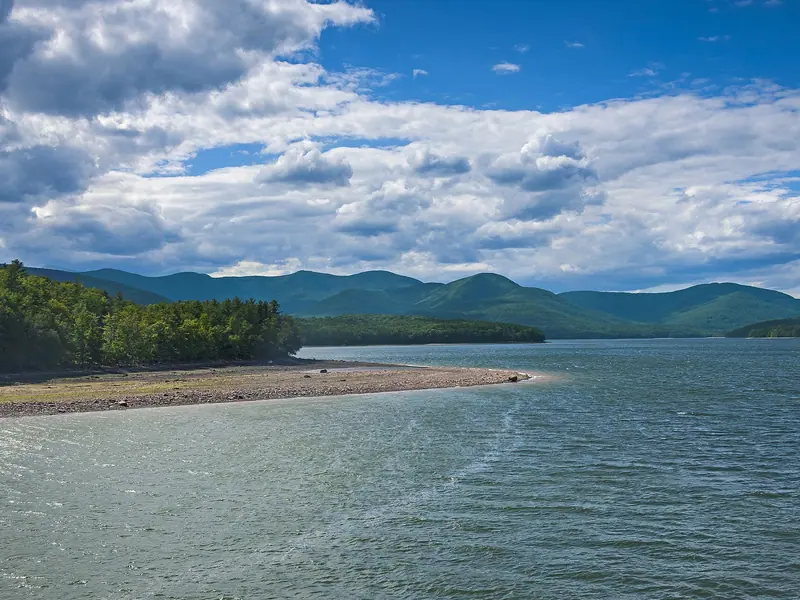
In 2025 the Catskill and Delaware systems supplied 91.3% of the city’s water and the Croton system 8.7% (DEP 2025 water quality report). The supply draws on 19 reservoirs and three controlled lakes across a watershed of nearly 2,000 square miles, some of it 125 miles north of the city. New York is one of only five large cities that does not filter its Catskill and Delaware water, while Croton water is filtered before it reaches the city. Neighborhoods get water from one system or a mix of all three, as DEP’s distribution map shows (DEP current distribution). Wells in southeast Queens have not supplied the city since 2007 (DEP groundwater page).
Legend: the numbers on this plate
- 91.3%share of 2025 supply from the Catskill and Delaware systemsDEP report
- 2 gpgaverage hardness, 2025 (32 mg/L); DEP calls up to 3 gpg softDEP report
- 0.6 mg/Laverage free chlorine in the mains, 2025 (limit 4)DEP report
- 10 ppb90th percentile lead in high-risk homes, 2025 (action level 15)DEP report
Is NYC water hard or soft?
Soft. DEP’s 2025 testing averaged 32 milligrams per liter of hardness, about 2 grains per gallon, across 313 samples, with a range of 1 to 6 grains per gallon (18 to 100 mg/L), so most samples sit in the soft band and the highest reach moderately hard. DEP counts anything up to 3 grains per gallon as soft and 3 to 9 as moderately hard. That is why a water softener isn’t needed for city water.
Why does the water taste of chlorine some days?
DEP adds chlorine to disinfect the water. In 2025 the free chlorine left in the mains averaged 0.6 mg/L, ranging from none detected to 1.4, against a limit of 4 mg/L. The amount is well under the limit, so a carbon filter for chlorine taste is a matter of preference, not of safety, for city water.
What can your building’s pipes add?
DEP says water reaches the city through about 7,000 miles of lead-free aqueducts, tunnels and mains, and its 2025 samples from the distribution system averaged non-detect for lead. Lead at the tap comes from service lines, solder and fixtures inside buildings. DEP limits it by adjusting the water’s pH and adding orthophosphate, which coats the inside of household pipes (DEP, Lead and Drinking Water). Of the 326 higher-risk homes DEP sampled in 2025, 16 came in over the 15 ppb action level. If your building is old, see lead service lines and order the free lead test kit.
Should you filter, test or do nothing?
For most buildings, nothing is needed. The supply met the limits shown here in 2025, and the yearly report is public. Three cases are worth acting on. If your building predates 1961 and has fewer than six units, test for lead. If you live in a tower with a roof tank, read the latest inspection result. If the water’s color, smell or taste suddenly changes, tell the super or owner and call 311. For lead, DEP points to filters certified for lead reduction.
Questions people ask
Is NYC tap water safe to drink?
DEP’s 2025 report lists no violation for the measures shown on this page. What changes from building to building is the plumbing between the main and your tap, which is why lead testing matters in older homes.
Does a NYC home need a water softener?
No. City water averaged about 2 grains per gallon in 2025, and DEP classes up to 3 as soft. Its moderately hard band only starts above that.
Why is NYC’s Catskill and Delaware water not filtered?
The city is one of five large US cities that does not filter its main supply. Croton water, the smaller share, is filtered before delivery.
Is there fluoride in the water?
Yes. DEP’s 2025 results show an average of 0.7 mg/L of fluoride.
Does any of Queens still get well water?
No. The southeast Queens wells have not supplied the city since 2007, so every Queens tap now gets upstate reservoir water.
How this plate was drawn
Source shares, hardness, chlorine, fluoride and lead figures come from DEP’s 2025 Drinking Water Supply and Quality Report, published in 2026 and checked 11 Nov 2026. DEP’s distribution map is an image, so we do not say which borough gets which system. The report covers the public supply, not water after a roof tank or inside a given building.
Sources
- NYC DEP 2025 report on drinking water supply and quality · source split, hardness, chlorine, fluoride, lead results · checked 11 Nov 2026
- NYC DEP — Current Water Distribution · neighborhoods get one system or a mix · checked 11 Nov 2026
- NYC DEP — Groundwater Supply System · southeast Queens wells idle since 2007 · checked 11 Nov 2026
- NYC DEP — Lead and Drinking Water · pH and orthophosphate corrosion control · checked 11 Nov 2026
- NYC Water (YouTube) — 2025 water quality report announcement · where to read the yearly report · checked 11 Nov 2026
Plate W-5 · revised 11 Nov 2026