B-4Building · two-family
Heat, hot water and pipes in a two-family house
In a two-family house, the owner runs the boiler or furnace, the water heater and the sewer line for both units, and once one unit is rented, HPD’s heat and hot water rules protect that tenant.
- Heat comes from
- One boiler or furnace in the basement, usually heating both floors
- Who controls the boiler
- The owner, who hires a licensed plumber or heating pro; the tenant reports and gives access
- The rule that matters most
- A rented unit in a two-family house gets the same heat and 120°F hot water minimums as any apartment (§27-2028, §27-2031)
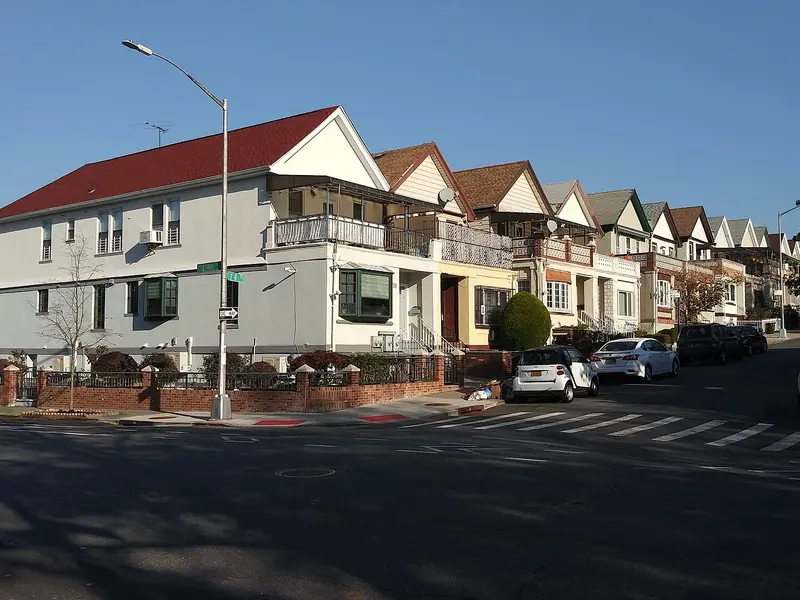
A two-family house holds two separate homes under one roof, and in the outer boroughs the usual set-up is an owner on one floor and a tenant on the other. With only two households it is not a multiple dwelling, so several big-building rules skip it. The heat and hot water rules do not: they follow the tenant.
Where does the heat come from here?
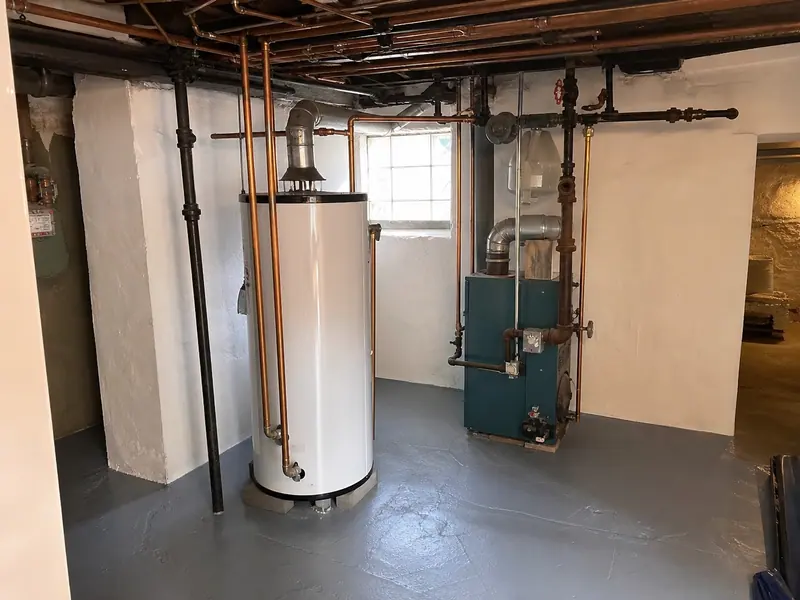
One heating plant in the basement warms both units, usually a gas or oil boiler feeding radiators or baseboard, or a furnace pushing warm air through ducts. A separate tank water heater often sits beside it, though some boilers make the hot water too. DOB is clear that a water heater stamped HLW cannot legally be used for space heat in a New York City building, so a heater sold for hot water is not a substitute for a boiler.
Who controls the boiler?
The owner controls the boiler or furnace and the thermostat that runs it, which matters when the tenant’s floor is on the same system. If the owner’s thermostat is downstairs and the tenant’s rooms run cold, the tenant’s remedy is the same as in any rental: tell the owner in writing, then call 311. Neither owner nor tenant should open or repair the burner, gas valves or flue; that is a licensed pro’s work.
For a two-family house, the Admin Code treats a like-for-like swap of a gas water heater, furnace or boiler up to 350,000 BTU as "ordinary plumbing work". That means no permit, yet a licensed plumber still does the job, keeps the existing shutoff valve where it is and has the chimney checked.
Which rules apply to this building?
Heat and hot water duties reach the tenant’s floor; most building-wide programs leave a two-family house out. Because §27-2028 and §27-2031 name tenant-occupied two-family homes, the rented floor is owed HPD’s heat-season minimums (68°F daytime when outdoors dips under 55°F, 62°F overnight) and hot water of at least 120°F in every month, as of 11 Nov 2026.
- Boiler inspection. Exempt: DOB requires no annual inspection for boilers in residential buildings of five families or fewer.
- Gas piping (Local Law 152). Exempt: one- and two-family homes are left out. A third unit changes that; three-family houses are covered.
- Carbon monoxide alarms. Owners must install them in one- and two-family homes, within 15 feet of each bedroom’s main door. The tenant keeps the batteries fresh and can be charged $25 for a new or replacement alarm, with a year to pay (311).
- Natural gas detectors. By HPD’s wording, the January 1, 2027 detector duty reaches a two-family house with gas piping when no owner lives there. If you as owner live in the house, check HPD’s detectors page for how it treats your case; the rule could still change.
- Lease terms. Section 27-2005 allows the owner and tenant of a two-family home to agree in writing that the tenant takes on some upkeep. Nothing in the code text says heat or hot water can move to the tenant, so read any such clause with care.
Who answers for what here?
The owner answers for the systems, and the lease decides a few smaller things. Unlike a walk-up, there is no super and no management company: the person to tell is the owner, usually living a floor away.
| Job | Owner | Licensed plumber or heating pro | Tenant |
|---|---|---|---|
| Heat | Owes the tenant HPD minimums | Repairs the boiler or furnace | Writes to the owner, then 311 |
| Hot water | Keeps 120°F at the tenant’s taps | Replaces the water heater | Reports cold or scalding water |
| Radiators and vents | Arranges any vent or valve work | Replaces vents and valves | Reports a radiator that stays cold |
| Gas piping | No LL152, but repairs still need an LMP | Does every gas job | Leaves on a gas smell, calls from outside |
| Water and sewer bill | One DEP meter, one bill | — | Pays only if the written lease says |
| Lead service line | Owner’s, street main to house | Replaces it under permit | Can order the free city test kit |
| House sewer | Owner’s, house to city sewer | Clears clogs, fits backwater valves | Stops using basement drains in a backup |
| Leaks between floors | Owner’s pipes in shared walls and ceilings | Opens up and repairs | Reports the drip the day it starts |
What goes wrong most in a two-family house?
Basement sewer backups are the headline risk. DEP counts about 74,000 properties at risk of backups in a 1.75-inch-per-hour storm, and about 59,000 of them are one- or two-family homes. The Plumbing Code requires backwater valves only in designated flood hazard areas; elsewhere they are optional, must be installed by a licensed plumber, and DEP warns not to use basement fixtures while the valve is closed. Report a backup to 311 and keep away from the sewage water. See sewer backups.
The second risk is scalding. CPSC urges a 120°F water heater setting and warns that most adults suffer third-degree burns in 6 seconds at 140°F and 2 seconds at 150°F; hot water rules explains the city minimum. Winter brings frozen pipes in unheated basements, and DEP puts protecting pipes and meters on the owner. For what a house pays DEP each quarter, see the water and sewer bill page.
Look up your own building
- NYC ZoLa · building class and unit count, which decide whether LL152 applies
- DEP lead and drinking water · the Service Line Map’s recorded material for your service line
- DOB find licensed professionals · confirm a plumber’s license is active
- HPDONLINE · complaints and violations at the address
- 311 · report a sewer backup, a damaged meter or no heat in the rented unit
Questions people ask
Does the heat law cover the tenant in a two-family house?
Yes. A rented floor in a two-family house is owed the same heat and hot water minimums as an apartment in a big building.
Does a two-family house need a Local Law 152 gas inspection?
No. One- and two-family homes are exempt. Gas repairs still need a Licensed Master Plumber, and a three-family house is covered.
Who pays for the CO alarm in the rented unit?
The owner installs it. 311 says the tenant maintains it and pays $25 for a new or replacement alarm, with up to a year to pay.
Should the owner put in a backwater valve?
It is required only in designated flood hazard areas. Elsewhere it is the owner’s choice; DEP says installation by a licensed plumber typically costs $4,000 to $15,000, and a poorly kept valve can cause backups rather than prevent them.
Can the tenant be billed for water?
Only if the written lease says so. DEP bills the property’s account, and in a one- or two-family house the lease can shift some duties to the tenant.
How this plate was drawn
For two-family houses we leaned on the Housing Maintenance Code (DOB’s compilation), DOB’s boiler, gas piping and Admin Code pages, DEP’s sewer backup report and bill pages, 311, HPD and CPSC, all checked 11 Nov 2026. Whether a written lease can move heat duties to a tenant is not settled by the code text we saw, so we flag it instead of answering. We have no count of two-family houses by borough.
Sources
- DOB — Housing Maintenance Code · rented one- and two-family houses, lease shifts · checked 11 Nov 2026
- DOB — 2022 Admin Code chapter 1 · ordinary plumbing work for heater swaps · checked 11 Nov 2026
- DOB — gas piping inspections · the two-family exemption · checked 11 Nov 2026
- DEP — protecting your home from backups · at-risk homes, backwater valve rules and costs · checked 11 Nov 2026
- CPSC — avoiding tap water scalds · 120°F setting and burn times · checked 11 Nov 2026
- NYC311 — carbon monoxide · owner installs, tenant pays $25 · checked 11 Nov 2026
Building sheet B-4 · revised 11 Nov 2026