H-4Heat · one-pipe steam
How does one-pipe steam heat work?
One-pipe steam heat sends steam up and lets water drain back down the same single pipe at each radiator, with a small air vent on the radiator letting air out so steam can get in.
Which building is yours?
- Prewar walk-upLikely your system: one-pipe is typical up to six storeys. Tell the super or owner; call 311 if heat falls below the legal minimum.
- Brownstone or row houseIf the house has steam, it is likely one-pipe. Owner-occupied: a licensed plumber or heating pro does the work. Renting: tell the owner.
- Co-op or condo high-riseTowers usually run two-pipe, but low-rise co-ops may have one-pipe. Report to the super or management; the proprietary lease sets who pays.
- Two-family houseIf the house has a steam boiler, the owner runs it and hires a licensed pro. The tenant tells the owner; the city heat rules cover the rented unit.
- New-build condoRare in new builds, which often heat unit by unit. If yours has steam radiators, report to building management; condo documents say who repairs what.
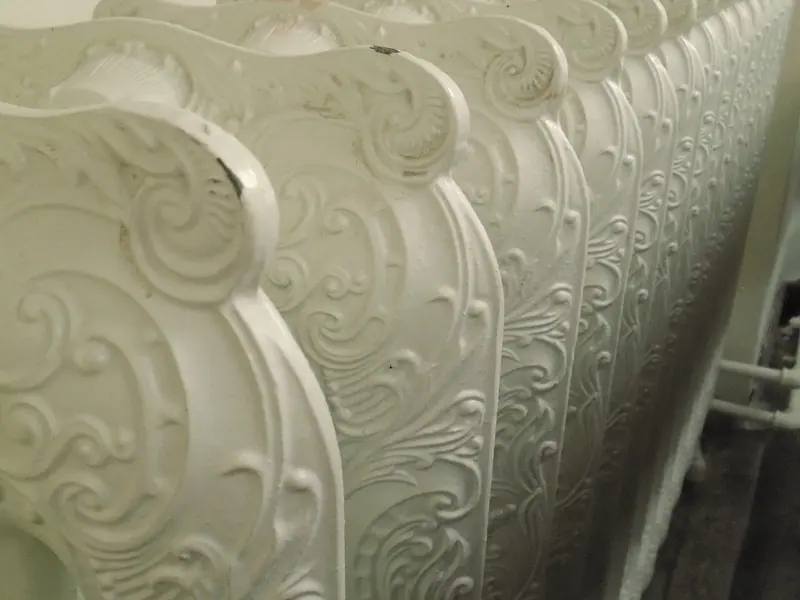
A one-pipe steam system has a boiler in the basement, a network of steel pipes, and one pipe running to each radiator. That single pipe carries steam up from the boiler and lets the water that forms when steam cools run back down to it, both at once. The NYC Accelerator puts it plainly: in a one-pipe system, steam and water move in opposite directions in the same pipe at the same time (NYC Accelerator one-pipe primer).
Which buildings in New York have one-pipe steam?
The city’s Accelerator primer places one-pipe steam mostly in buildings of six storeys or fewer. That puts it in many prewar walk-ups and, where the house has steam at all, in brownstones and row houses and older two-family houses. Taller buildings more often use two-pipe steam, which has a separate return pipe and a trap at each radiator.
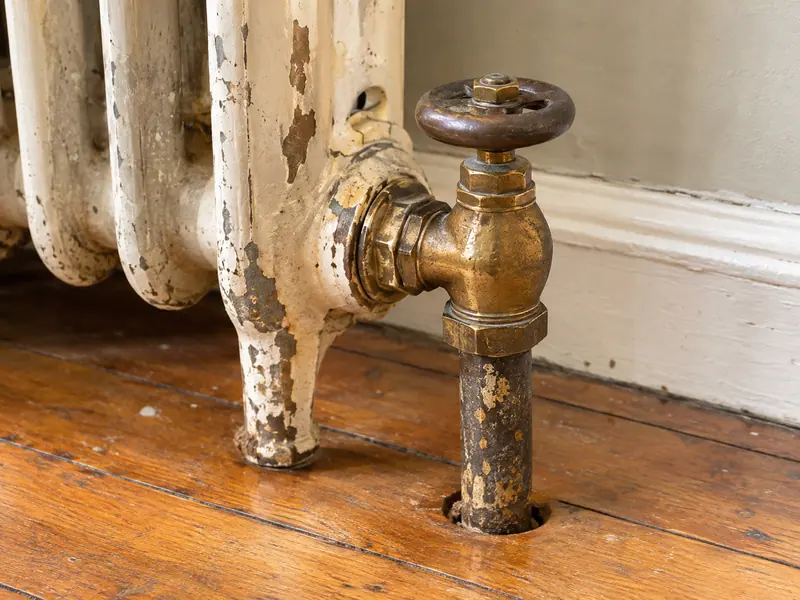
You can usually tell by looking: a one-pipe radiator has a single pipe and valve at the bottom and a small metal vent on the far end.
| Building | Where the boiler is | Who runs it | First person to tell |
|---|---|---|---|
| Prewar walk-up | Basement, one boiler for the building | Owner, through the super | Super or owner, then 311 |
| Brownstone or row house | Basement or cellar | The owner | Owner-occupied: your licensed pro; tenant: the owner |
| Co-op or condo high-rise | Basement boiler room | Board, through management and the super | Super or management company |
| Two-family house | Basement | The owner | Tenant tells the owner |
| New-build condo | Usually no steam; unit equipment instead | Depends on condo documents | Building management |
How does steam get into a radiator?
Air has to leave before steam can enter. When the boiler cycles off, air rushes back into the pipes and radiators, and the next cycle has to push it out again (NYC Accelerator). The vent on each radiator lets that air escape and then closes when hot steam reaches it. Larger vents at the ends of the basement steam mains do the same job for the main lines.
The US Department of Energy’s steam balancing guide says there should be at least one main-line vent per steam line, separate from the radiator vents. Without them, radiators near the boiler fill with steam much faster than those far away (US DOE Building America guide). That is one reason a top-floor apartment at the end of a long run can stay cold while a ground-floor one roasts. Vents get their own page: radiator air vents.
What pressure should a one-pipe system run at?
Very low. The DOE guide says one-pipe steam should typically run at ½ to 1½ psig, and boiler maker Weil-McLain says typical one- and two-pipe systems need less than 2 psig (Weil-McLain’s oil-fired steam boiler manual). The DOE notes that wrong pressure settings cause short boiler cycles and distribution problems.
These figures are context for your questions, not settings to touch. Pressure controls are boiler-room work for the super or a licensed pro. Above 15 psig a steam boiler counts as high-pressure under city code; yearly checks are covered under boiler inspections.
Legend: the numbers on this plate
- Oct 1 – May 31heat season under the housing codeHMC heat section
- ½–1½ psigtypical one-pipe operating pressureUS DOE Building America
- 6 storeysone-pipe is typical in buildings up to this heightNYC Accelerator
Why do one-pipe systems bang and heat unevenly?
Much of it is history. The Accelerator primer says most steam boilers and their piping were designed in the early 20th century to burn coal and were never updated for oil and gas. Many were left short of air vents, and their boilers are often over double the size the building calls for. The results it lists are clanging pipes, leaky radiators, and some apartments too cold while others are too hot. Our banging radiators page goes through the noise in more detail.
The fixes the primer names are all building-level work: high-capacity vents on mains and risers, correctly sized slow vents on every radiator, smart thermostatic radiator valves, skimming oil off the boiler water, and tuning the burner. It also says to consult a qualified service provider before any upgrade.
What can a resident do with a one-pipe radiator?
Watch, note and report. The DOE guide says radiator valves should be fully open or fully closed, were not designed to be throttled, and tenants should not tamper with them. A half-closed valve traps water in the radiator and keeps steam out.
Useful things to note before you call: which room, which radiator, whether it is cold, warm only at one end, hissing or spitting, and what time of day it happens. In a rental, give that to the super or owner. If indoor heat drops below the legal minimum from October 1 to May 31, at least 68°F from 6am to 10pm on days under 55°F outdoors and 62°F overnight (HPD heat rules), the next step is a 311 heat complaint.
Look up your own building
- HPDONLINE · open heat violations and complaints on file for your building’s address
- 311 heat or hot water complaint · how to report a building-wide or single-apartment heat problem
Questions people ask
Is one-pipe steam worse than two-pipe?
Not by itself. The Accelerator says a maintained one-pipe system with a few upgrades can give balanced, reliable heat. It leans heavily on its air vents, so neglect shows quickly.
Why does only one end of my radiator get hot?
Steam fills a radiator from the valve end as air leaves through the vent. A radiator that stays cool at the vent end may have a vent that is not passing air, or the boiler cycle may end before steam gets there. Report it with the time of day you noticed it.
Can a half-closed valve cool down a hot room?
The DOE guide says no: one-pipe radiator valves should be fully open or fully closed, and a half-open valve keeps condensate in the radiator. Ask the super about a thermostatic radiator valve, which the Accelerator lists as the tool for room-by-room control.
Does the city inspect my building’s steam boiler?
DOB requires a yearly low-pressure boiler inspection in residential buildings with six or more families. Buildings of five families or fewer are exempt, which covers most brownstones and two-family houses.
Do the heat rules still apply if the system is old?
Yes. Covered buildings must meet HPD’s indoor minimums in heat season, however old the boiler or piping.
How this plate was drawn
Built from the NYC Accelerator’s one-pipe primer, the DOE steam balancing guide, a Weil-McLain boiler manual and HPD’s heat page, all checked 11 Nov 2026. Vent sizing is left out: that is contractor work. We found no primary source on how far a radiator should slope, so we give no figures for it. Which buildings have one-pipe steam is the Accelerator’s general rule, not a survey of New York buildings.
Sources
- NYC Accelerator — Tech Primer: One-Pipe Steam Optimization · how one-pipe works, where it is found, why it bangs, upgrades · checked 11 Nov 2026
- US DOE Building America — Steam System Balancing and Tuning measure guideline · ½–1½ psig, main-line vents, radiator valves · checked 11 Nov 2026
- Weil-McLain — steam boiler manual, SGO oil-fired Series 4 · under 2 psig for typical systems · checked 11 Nov 2026
- HPD heat and hot water page · the October-to-May minimums · checked 11 Nov 2026
- NYC DOB — Boiler Compliance · the six-family line for annual boiler checks · checked 11 Nov 2026
- NYC DOB — 2022 Construction Codes, Chapter 4 · high-pressure steam boiler definition · checked 11 Nov 2026
Plate H-4 · revised 11 Nov 2026