G-1Gas · Local Law 152
Local Law 152: when is your gas piping due?
Local Law 152 requires most NYC buildings to have their gas piping inspected by a Licensed Master Plumber every four years, in a year set by the building’s community district; one- and two-family houses are exempt.
Which building is yours?
- Prewar walk-upCovered. The owner hires the Licensed Master Plumber and files; tenants mostly see a notice asking for access to the cellar and halls.
- Brownstone or row houseCovered only with three or more units. A one- or two-family brownstone is exempt; a three-family one is in, with a $1,500 penalty for not filing.
- Co-op or condo high-riseCovered. The board hires the plumber and files; since February 2026, piping and appliances inside apartments are outside the inspection.
- Two-family houseNot covered: LL152 exempts one- and two-family houses. The separate natural gas detector rule can still apply if you rent out a unit.
- New-build condoCovered, but a building whose certificate of occupancy came on or after Dec 6, 2016 waits until its 10th year, then joins its district’s cycle.

Does Local Law 152 apply to your building?
It applies to the gas piping in every building except one- and two-family homes and other buildings in Occupancy Group R-3 (NYC DOB, Periodic Gas Piping System Inspections). DOB lists the exempt Department of Finance building classes, among them A0 to A9 and B1 to B3. A three-family house is covered, so a row house split into three apartments needs the inspection. If your building has no gas piping at all, the owner files a statement saying so instead of an inspection.
Apartment buildings are almost always in: a prewar walk-up qualifies, and so does any co-op or condo tower. The duty sits with the owner, the co-op board or the condo board, never with a tenant or a single shareholder.
When is your building due?
The year depends on the community district number, and the numbering works the same way in all five boroughs. 2026 is the year for sub-cycle C, which means community districts 4, 6, 8, 9 and 16 are due by Dec 31, 2026. Sub-cycle D follows in 2027.
| Sub-cycle | Community districts | Cycle 2 | Cycle 3 |
|---|---|---|---|
| A | 1, 3, 10 | 2024 | 2028 |
| B | 2, 5, 7, 13, 18 | 2025 | 2029 |
| C | 4, 6, 8, 9, 16 | 2026 | 2030 |
| D | 11, 12, 14, 15, 17 | 2027 | 2031 |
Each window runs from January 1 to December 31 of the year shown. Newer buildings get a pause: if the certificate of occupancy was issued on or after Dec 6, 2016, no inspection is needed until the 10th year after it, according to DOB’s July 2026 training deck (DOB LL152 industry session). That covers many new-build condos.
How do you find your community district?
DOB’s own instruction is to search your building’s address on the Department of City Planning’s site, which tells you the district your address sits in. City Planning’s ZoLa map shows the district too once you click your lot. DOB also runs an address lookup on its DOB NOW public site that shows a building’s LL152 status. Match the district number to the table above and you have the year.
Look up your own building
- City Planning Community Profiles · type your address to get your community district number
- NYC ZoLa · click your lot to see its community district and building details
- DOB NOW public site, LL152 Gas Piping System Compliance · under Additional Tools: whether your building has filed
- DOB BIS · your building’s DOB record and complaints
What does the inspection actually cover?
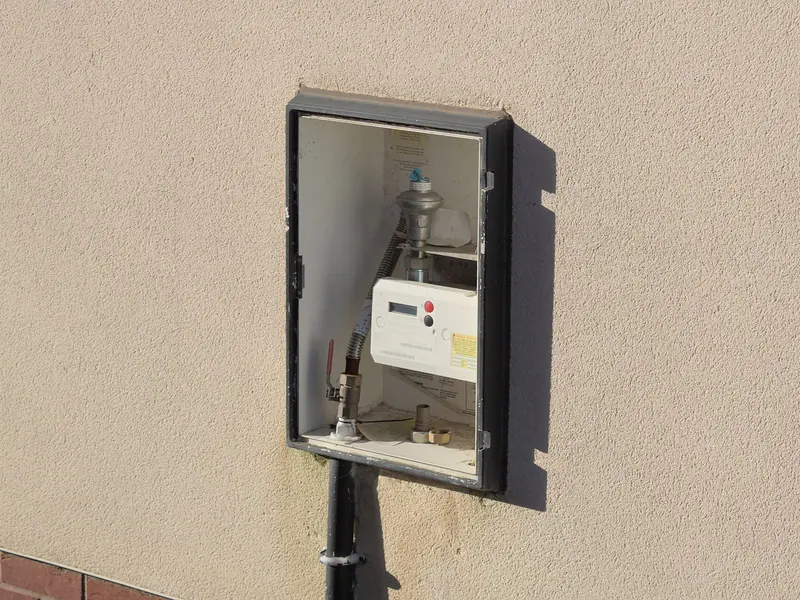
A Licensed Master Plumber, or a journeyman plumber working under one who has taken at least 7 hours of DOB-accepted training, walks the exposed gas piping (1 RCNY §103-10). Since Local Law 142 of 2025 took effect on Feb 24, 2026, the inspection runs from the point where gas piping enters the building to each appliance connection, including appliances in commercial spaces. Piping and appliances inside apartments are exempt (DOB LL152 FAQs). In practice the plumber spends time in the cellar, the meter room, hallways and any shop on the ground floor.
If the plumber finds an unsafe or hazardous condition, DOB requires them to tell the owner, the gas utility and DOB right away. That can lead to a shutoff of part or all of the building; what happens when gas is shut off covers the restoration steps. Residents never reopen a valve or relight anything after a shutoff.
What has to be filed, and by when?
The plumber gives the owner an inspection report within 30 days. The owner then has 60 days from the inspection to file a certification signed and sealed by the plumber. Since July 27, 2026, every LL152 filing goes through DOB NOW: Safety, and the old paper GPS1 and GPS2 forms are no longer accepted (DOB Follow-up #8). If repairs are needed, a certification of correction is due within 120 days, or 180 days when the first certification said more time was needed.
Legend: the numbers on this plate
- 4 yearsHow often covered buildings must have gas piping inspected1 RCNY §103-10 schedule
- 10th yearFirst inspection for buildings with a certificate of occupancy from Dec 6, 2016 onDOB July 2026 training deck
- $5,000Penalty for not filing, most buildings1 RCNY §103-10
- $1,500Penalty for not filing, three-family building1 RCNY §103-10
- $35DOB NOW fee to file the inspection certification, from July 27, 2026 (an extension request is a separate $35)DOB Follow-up #8
What does skipping it cost?
Failing to file the certification costs $1,500 for a three-family building and $5,000 for any other covered building, under the DOB rule as of 11 Nov 2026. DOB’s FAQ says these penalties are paid in full, without late fees or interest, and DOB began sending Notices of Deficiency to first-cycle non-filers in January 2025. The owner can ask once for a 180-day extension of the due date; that request carries its own $35 fee, separate from the $35 certification filing fee.
What should tenants and shareholders expect?
Mostly a notice and a visit. The plumber may need to see piping in the cellar or the halls, and a gas stove or dryer in a commercial space may be checked. If the building’s gas is shut off after an inspection, the owner must restore it, and a tenant whose service lags can call 311 for HPD. Before hiring anyone for the work, owners can check a plumber’s license; how permits and licensed plumbers work shows how.
Questions people ask
Does LL152 apply to a two-family house?
No. One- and two-family homes and other R-3 buildings are exempt. A three-family house is covered.
Our district was due in 2024. When is the next one?
Sub-cycle A, community districts 1, 3 and 10, is next due in 2028. Each sub-cycle comes back four years later.
Can a journeyman plumber do the inspection?
Only while working under a Licensed Master Plumber’s direct and continuing supervision, and after at least 7 hours of DOB-accepted training. The certification is still signed and sealed by the master plumber.
Are the stove and pipes inside my apartment inspected?
Not since Feb 24, 2026. Local Law 142 of 2025 exempts piping, equipment and appliances inside dwelling units, so the work is in common areas and commercial spaces.
Our condo got its certificate of occupancy in 2019. Are we due?
Not until the 10th year after that certificate. After that, the building follows its community district’s sub-cycle.
How this plate was drawn
Drawn from DOB’s LL152 page and FAQ, the July 2026 DOB NOW training deck, the Follow-up #8 service notice and the rule text in 1 RCNY §103-10, all checked 11 Nov 2026. The Admin Code itself still says five years; the rule sets the four-year cycle used here. We could not open the April 2026 Follow-up #7 notice directly, because DOB’s link pointed to an older file. City Planning’s Community Profiles search is the tool DOB names for finding your district.
Sources
- NYC DOB — Periodic Gas Piping System Inspections · coverage, schedule, deadlines, community district lookup · checked 11 Nov 2026
- NYC DOB — LL152 FAQs · scope after Local Law 142 of 2025, penalties paid in full · checked 11 Nov 2026
- NYC DOB — 1 RCNY §103-10 · who may inspect, penalty amounts · checked 11 Nov 2026
- NYC DOB — Follow-up #8, LL152 filings move to DOB NOW · July 27, 2026 switch, fees · checked 11 Nov 2026
- NYC DOB — DOB NOW: Safety LL152 industry session, July 2026 · 10-year wait for newer buildings · checked 11 Nov 2026
Plate G-1 · revised 11 Nov 2026