GGas · smell, shutoffs, CO
Gas and carbon monoxide, building by building
Gas and carbon monoxide rules in NYC depend first on your building: who owns the piping, whether Local Law 152 inspections apply, and who installs the alarms, while the emergency steps are the same everywhere.
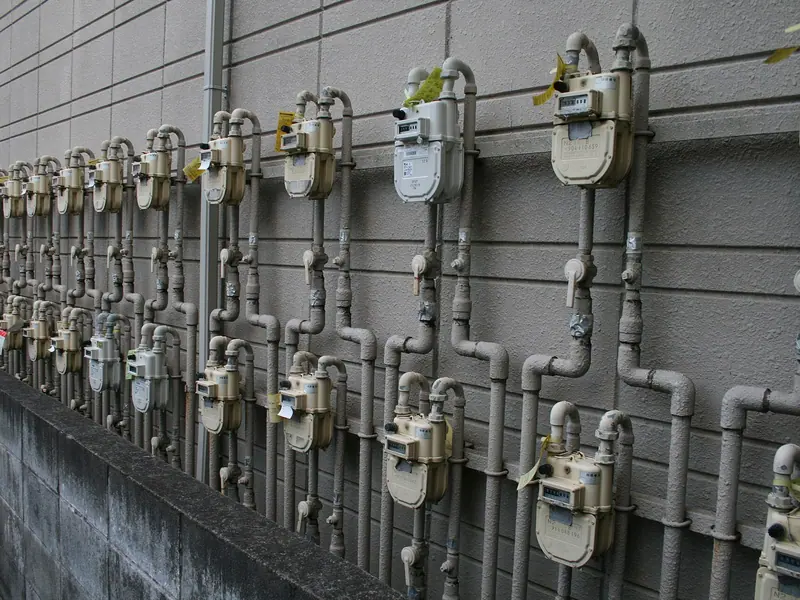
The plates in this section


Start with your building
Where you rent in a prewar walk-up, or live in any co-op or condo tower, the owner or board is responsible for the gas piping, the four-year Local Law 152 inspection and the CO alarms in rental units. In a two-family house or a one- or two-family brownstone, LL152 does not apply, but the owner still installs CO alarms and, from January 1, 2027, a natural gas detector if a unit is rented. In a new-build condo, the first gas piping inspection waits until the building’s 10th year.
| Building | LL152 gas inspection | Who installs CO alarms | Who restores gas after a shutoff |
|---|---|---|---|
| Prewar walk-up | Yes, every 4 years | Owner | Owner, through a Licensed Master Plumber |
| Brownstone or row house | Only with 3 or more units | Owner | Owner |
| Co-op or condo high-rise | Yes | Owner for rentals; board and residents decide otherwise | Board |
| Two-family house | No | Owner | Owner |
| New-build condo | Yes, from the 10th year | Owner for rentals | Condo board for common piping |
If you smell gas or a CO alarm sounds
The steps do not depend on the building. For a gas smell: touch nothing that could spark, leave with everyone you can, and call 911 and your gas utility only once you are outside and away. Looking for the leak is the utility’s job, not yours (Con Edison gas leak FAQ). For a CO alarm: everyone out, then 911 from outside, and never assume it is false. The full steps are on what to do if you smell gas and carbon monoxide alarms.
Your utility is Con Edison or National Grid, whichever bills you for gas. After any shutoff, residents never reopen valves or relight pilots; the utility tests the piping before gas comes back.
The four pages in this section
- What to do if you smell gas: leave first, what not to touch, the signs of a leak, and the detector rule coming in 2027.
- Gas shut off in your building: why it happens, the plumber, DOB and utility steps before gas returns, and what tenants can do when the owner stalls.
- Local Law 152 gas piping inspections: which buildings are covered, the year your community district is due, and how to look it up.
- Carbon monoxide alarms: where the owner must put them, who tests them, the $25 a tenant repays, and how long they last.
Two dates worth knowing
Each community district has a fixed LL152 turn: districts 4, 6, 8, 9 and 16 in every borough fall in sub-cycle C (2026, then 2030), and districts 11, 12, 14, 15 and 17 in sub-cycle D (2027, then 2031) (DOB gas piping inspections). And natural gas detectors must be in place by January 1, 2027 in apartment buildings, and in one- and two-family homes with a tenant, wherever there is gas piping, as HPD’s page reads on 11 Nov 2026; the date could still change, so check HPD’s detector page.
Gas piping work of any kind is for a Licensed Master Plumber; permits and plumbers explains how to check a license.
How this plate was drawn
This section draws on Con Edison, National Grid, DOB, HPD, FDNY and 311 pages, all checked 11 Nov 2026. Where city notices list extra indoor steps before leaving, we follow the gas utilities and put leaving first. We do not say which utility serves which area, because we found no city source for it. The 2027 detector date was not confirmed final when we checked.
Sources
- Con Edison — Gas leak FAQ · leave first, do not investigate · checked 11 Nov 2026
- NYC DOB — Gas piping inspections under LL152 · coverage and schedule by community district · checked 11 Nov 2026
- HPD — gas and CO detector requirements · CO alarms and the 2027 gas detector date · checked 11 Nov 2026
- NYC DOB — when the gas is cut off · owner duty to restore, tenant options · checked 11 Nov 2026