H-2Heat · hot water
How hot must the hot water be in NYC?
NYC hot water rules require at least 120°F at every bath, shower and sink, 365 days a year, in apartment buildings and in rented units of one- and two-family houses.
Which building is yours?
- Prewar walk-upCovered. The owner must deliver 120°F hot water at every tap all year; report a cold tap to the super, then to HPD through 311.
- Brownstone or row houseCovered for any rented unit. In a house lived in only by its owner’s household, no city minimum applies, but scald limits still matter.
- Co-op or condo high-riseCovered. The central system serves every apartment, so the board and management company handle it; report to them first.
- Two-family houseThe tenant’s unit is owed 120°F hot water all year, and the owner keeps the heater or boiler that supplies it working.
- New-build condoCovered as a multiple dwelling. If the water heater sits inside your unit, the condo documents decide who repairs it.
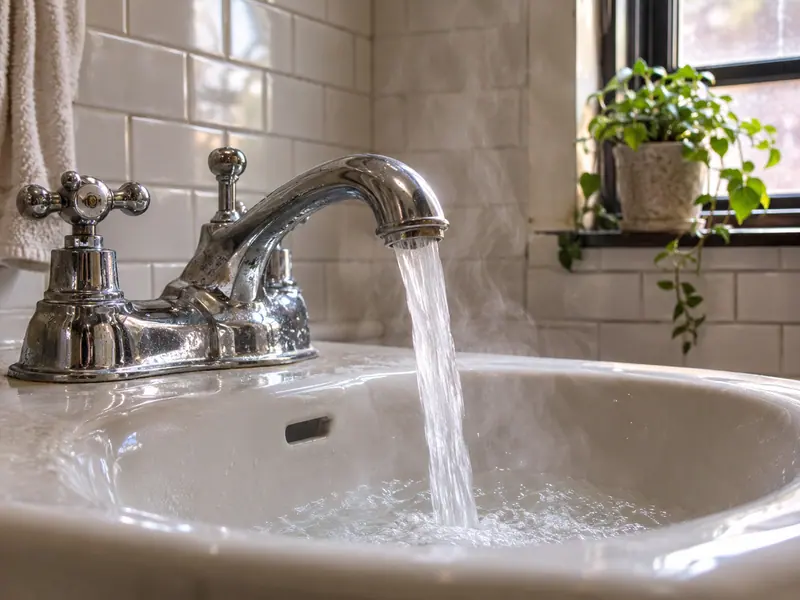
Which building you live in decides who answers for the hot water. In a prewar walk-up or a co-op high-rise, a central boiler or heater in the cellar supplies every apartment, and the owner, board or management company keeps it running. In a two-family house the owner owes the tenant’s apartment the same minimum as any apartment building. Only a house occupied by its owner’s household alone, with no tenant, sits outside the rule.
How hot must the hot water be?
At least 120°F, at a constant temperature, 365 days a year. That is how HPD states it on its heat and hot water page, and 311 and the state housing agency publish the same 24-hour, year-round duty. Unlike heat, hot water has no season and no outdoor trigger, so a cold shower in July is as much a violation as one in January.
What does the code’s own wording say?
Section 27-2031 of the Housing Maintenance Code requires 120°F at every bath, shower, washbasin and sink in a multiple dwelling or tenant-occupied one- or two-family house. The code’s wording names the hours "between the hours of six a.m. and midnight". HPD’s enforcement statement is broader: hot water "must be provided 365 days per year at a constant minimum temperature of 120 degrees". Tenants can rely on HPD’s published standard when they report a problem.
When is 110°F allowed?
Only at a shower or tub fitted with a pressure-balancing or thermostatic mixing valve. They mix hot and cold water at the fixture, and the code lets the water at that fixture run cooler, but never below 110°F. New York State’s housing agency repeats the 110°F floor in its FS-15 guide to heat and hot water. Every other tap in the apartment still needs 120°F.
How fast can hot tap water burn?
Faster than most people expect. The Consumer Product Safety Commission says most adults suffer third-degree burns in 2 seconds at 150°F and in 5 minutes at 120°F, which is why it urges water heaters be set to 120°F. The people most often scalded are older adults and children under five.
| Water temperature | Time to a third-degree burn |
|---|---|
| 150°F | 2 seconds |
| 140°F | 6 seconds |
| 130°F | 30 seconds |
| 120°F | 5 minutes |
Legend: the numbers on this plate
- 120°FMinimum at every bath, shower, washbasin and sinkHousing Maintenance Code §27-2031
- 110°FFloor at a shower or tub with a mixing valveNYS HCR, FS-15
- 2 secondsTime to a third-degree burn at 150°FCPSC
- 5 minutesTime to a third-degree burn at 120°FCPSC
What can you do about water that runs too hot?
Report it rather than adjust anything yourself. CPSC advises people who live in apartments to talk to the building manager about lowering the tap temperature, and that is the route in a walk-up, a co-op or a rented floor. In a house you own, ask a licensed plumber to check the heater setting and whether a mixing valve suits your fixtures. The water heater, boiler and the gas or oil burner feeding them are not resident jobs in any building.
What if there is no hot water?
Let the super, owner or management company know the same day; if the tap stays cold, HPD takes an apartment or building-wide complaint through 311. The steps that follow are on filing a heat complaint with 311. A hot water violation is Class C, like heat, and since December 8, 2023 a first one can cost the owner between $350 and $1,250 for each day it stays open. HPD also bills $200 for each violating hot water inspection after the first two in a calendar year.
Rent-stabilized tenants can also apply to DHCR on form HHW-1 for one apartment or RA-84 for the whole building, with an HPD report attached, as rent-stabilized repairs explains. The night and day heat minimums, which work differently, are on heat season rules.
Look up your own building
- HPDONLINE · hot water violations and complaints already on record for your building
Questions people ask
Does my landlord have to provide hot water at night?
HPD’s published standard is 120°F at a constant minimum, 365 days a year, which is how HPD, 311 and DHCR describe the duty. The code text names 6am to midnight; HPD’s statement covers the whole day.
My shower runs at 112°F. Is that a violation?
Not if the shower has a pressure-balancing or thermostatic mixing valve, which may deliver as little as 110°F. Without one, the shower needs 120°F.
Is 120°F hot enough to scald?
It can, given time. CPSC says most adults suffer a third-degree burn after 5 minutes at 120°F, and after only 2 seconds at 150°F.
Can the owner of a two-family house skip hot water for the tenant?
No. Section 27-2031 covers tenant-occupied one- and two-family dwellings, so the rented apartment must get 120°F hot water year-round.
Who fixes a water heater inside a new condo unit?
The condo documents decide whether the unit owner or the board repairs equipment inside your apartment; 311 sends condo residents to the board or management company first.
How this plate was drawn
Four documents carry this page, each checked on 11 Nov 2026: HPD’s online heat and hot water guidance, code section 27-2031, DHCR’s FS-15 (December 2022) and the CPSC scald leaflet, Publication 5098. Where the code’s 6am-to-midnight wording and HPD’s 365-day statement part ways, both appear and HPD’s standard is the one we follow. The burn times are for adults; children burn faster, which CPSC notes but does not time. Dollar figures stand as of that date.
Sources
- Heat and Hot Water — NYC HPD · 120°F, 365 days a year; $200 inspection fee · checked 11 Nov 2026
- Housing Maintenance Code §27-2031 — NYC DOB PDF · §27-2031 wording, the 110°F mixing-valve floor, §27-2115 penalties · checked 11 Nov 2026
- FS-15 Heat and Hot Water (Dec 2022) — NYS Homes and Community Renewal · 110°F floor; HHW-1 and RA-84 · checked 11 Nov 2026
- Avoiding Tap Water Scalds, Publication 5098 — U.S. CPSC · 120°F setting and scald times · checked 11 Nov 2026
- KA-01036 Heat or Hot Water Complaint — NYC311 · apartment and building-wide complaint types · checked 11 Nov 2026
Plate H-2 · revised 11 Nov 2026