B-3Building · co-op high-rise
Heat and repairs in a co-op or condo high-rise
In a co-op or condo high-rise, the board and its management company run the boiler and the risers, while the proprietary lease or condo bylaws decide which pipes and fixtures inside your apartment are yours to fix.
- Heat comes from
- A central boiler plant feeding two-pipe steam or hot water to every apartment
- Who controls the boiler
- The board decides; the management company and super run it; shareholders and renters report to them
- The rule that matters most
- City heat and 120°F hot water rules bind the building’s owner here too; 311 sends co-op and condo residents to the board first
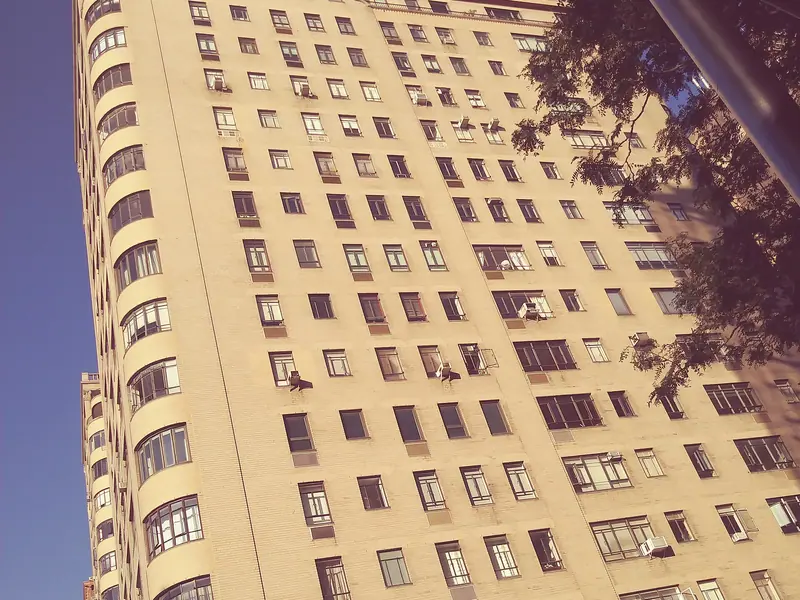
A co-op or condo high-rise is a tall apartment building, often with an elevator, a lobby and a full-time super, where residents own their homes but not the building’s systems outright. In a co-op you hold shares in the corporation that owns the building; in a condo you own your unit plus a share of the common parts. Either way, one central plant heats everyone, and a board decides how it is run.
Where does the heat come from here?
A central boiler plant, usually in the cellar, heats the whole building, and in older towers it commonly makes steam. The city’s Retrofit Accelerator notes that two-pipe systems are typical in buildings of six stories or more: each radiator has a supply pipe and a separate return, and a steam trap lets only water and air into the return. The primer says burners should be tuned every year and traps tested regularly, both jobs for the building’s contractors. Some newer or converted towers use hot water instead; two-pipe steam shows how to tell.
Who controls the boiler?
The board controls the boiler through its management company and super. Shareholders and condo owners vote for the board but do not run the plant, and nobody in an apartment should touch the boiler, the burner or a steam trap. The Attorney General reminds co-op boards that they must use prudent business judgment and follow the bylaws and proprietary lease, which you can get from the offering plan or from the board.
If heat is short, tell the super first, then the management company in writing. If nothing changes, residents can take it to 311, which names the board among the parties to tell before filing.
Which rules apply to this building?
All the multiple dwelling rules apply. The heat and hot water duties under Admin Code §27-2028 and §27-2031 cover any building with three or more families, and 311’s maintenance guidance is written for rental and cooperative building owners. As of 11 Nov 2026, HPD’s floor is 68°F in the day when it is below 55°F outdoors and 62°F at night from October 1 to May 31, with 120°F hot water year-round.
- Boiler inspection. With six or more families, the building’s low-pressure boiler needs an inspection every calendar year by a licensed inspector or an insurance company’s inspector, with the report filed with DOB within 14 days; defects must be fixed within 90 days.
- Gas piping (Local Law 152). Covered. A Licensed Master Plumber inspects the building’s gas piping every four years by community district; piping inside apartments is outside the inspection’s scope since Local Law 142 of 2025.
- Roof water tank. DOHMH says buildings over six floors pump water up to roof tanks. The owner must have the tank inspected and sampled every year, report by January 15 and post a notice that the results are available.
- Carbon monoxide alarms. In owner-occupied co-op and condo apartments, 311 says the board and the shareholders must decide who is responsible.
- Natural gas detectors. HPD lists January 1, 2027 for multiple dwellings with gas piping, as of 11 Nov 2026.
Who answers for what here?
The building answers for anything shared, and the shareholder or unit owner answers for what the lease or bylaws put inside the apartment. A 1994 Attorney General memo puts heat and the repair of a burst pipe on the building side, and items such as apartment painting or a broken bathroom tile on the owner’s side. 311 adds that the agreements between the owner and the board decide which conditions the board must fix.
| Job | Board (co-op corporation or condo) | Super and management company | Shareholder or unit owner | Renter in the unit |
|---|---|---|---|---|
| Heat | Funds and decides | Runs the plant, takes complaints | Reports; pays maintenance or common charges | Tells their landlord and the super |
| Hot water | Central heater or boiler | Keeps it at 120°F | Reports low temperature | Reports through the unit owner |
| Radiators and vents | Risers, traps on shared lines | Services traps and vents | In-unit parts if the lease says so | Reports, never adjusts |
| Gas piping | LL152 for the building | Hires the plumber | Unit-side piping per the documents | Gets outside before calling about gas |
| Water and sewer bill | Building DEP account | Watches usage | Pays through monthly charges | Not billed directly |
| Lead service line | Corporation’s line to the main | Passes on DEP mail | — | Can ask 311 for a test kit |
| House sewer | Building lateral to the street | Calls the plumber | — | Reports drains backing up |
| Leaks between floors | Pipes in walls and risers | Traces the source | Own fixtures and finishes per the lease | Calls the super right away |
What goes wrong most in a co-op high-rise?
Leaks between floors are the classic co-op dispute, because the answer depends on whether the failed pipe is a building riser or a fixture inside one apartment. Start with who fixes what and your own proprietary lease. For uneven heat in a tall steam building, ask the super when the traps were last tested, as the Accelerator advises; see two-pipe steam and banging radiators.
A gas shutoff in a high-rise can leave every kitchen without gas while the board’s plumber files with DOB; gas shut off in the building explains the timeline. In a converted building that still has rent-stabilized tenants, the board and its managers must give them the services the law requires; see rent-stabilized repairs.
Look up your own building
- HPDONLINE · heat violations, complaints and the registered managing company for your building
- DOB gas piping inspections · your building’s LL152 sub-cycle and status
- DOHMH water tank results · the self-reported roof tank inspection for your address or BIN
- NYC ZoLa · year built, floors and community district
- 311 · no-heat or no-hot-water complaints when the super and board don’t act
Questions people ask
Can a co-op shareholder file a no-heat complaint with 311?
Yes. 311 asks co-op and condo residents to report to the board or management company first. If heat stays below the minimums, the complaint can go to 311 and on to HPD.
Who pays when a pipe in the wall floods the apartment below?
It depends on the proprietary lease or condo bylaws. The Attorney General treats a burst pipe as a building-wide repair, but damage to finishes inside units may be split differently by the documents, so read yours and ask the management company.
Does the board have to inspect the roof water tank?
Yes, if the building has a drinking water tank. DOHMH requires a yearly inspection with a bacteriological sample, a report filed by January 15, and a posted notice; there is no fixed yearly cleaning rule.
Who replaces the CO alarm in a co-op apartment?
In owner-occupied co-op and condo units, 311 says the board and shareholders must decide. Renters of a unit look to their landlord, who must install one within 15 feet of each sleeping room’s main door.
Are rent-stabilized tenants in a converted co-op still owed heat?
Yes. Under General Business Law §352-eeee, the co-op corporation and its managers must provide the services the law requires to rent-stabilized tenants, on the same terms as everyone else.
How this plate was drawn
Sources here are HPD and 311 pages on heat and maintenance, DOB’s boiler and gas piping pages, DOHMH’s water tank pages, the Accelerator’s two-pipe primer and two Attorney General publications, all checked 11 Nov 2026. The Attorney General memo dates from 1994 and is an interpretation, not a statute. We found no city rule that splits repairs between boards and owners; that split lives in each building’s own documents, which this page cannot see.
Sources
- Retrofit Accelerator — two-pipe primer · steam traps and taller buildings · checked 11 Nov 2026
- NYC311 — apartment maintenance · the board-or-unit-owner split for repairs · checked 11 Nov 2026
- NY Attorney General — dealing with a co-op board · board duties, where to find the bylaws · checked 11 Nov 2026
- NYS Attorney General — 1994 services memo · building-wide versus in-unit repairs · checked 11 Nov 2026
- DOB — boiler compliance · yearly inspection for six-plus families · checked 11 Nov 2026
- DOHMH — water tank reporting · roof tank duties in tall buildings · checked 11 Nov 2026
- NYS HCR — essential services · services owed in converted buildings · checked 11 Nov 2026
Building sheet B-3 · revised 11 Nov 2026